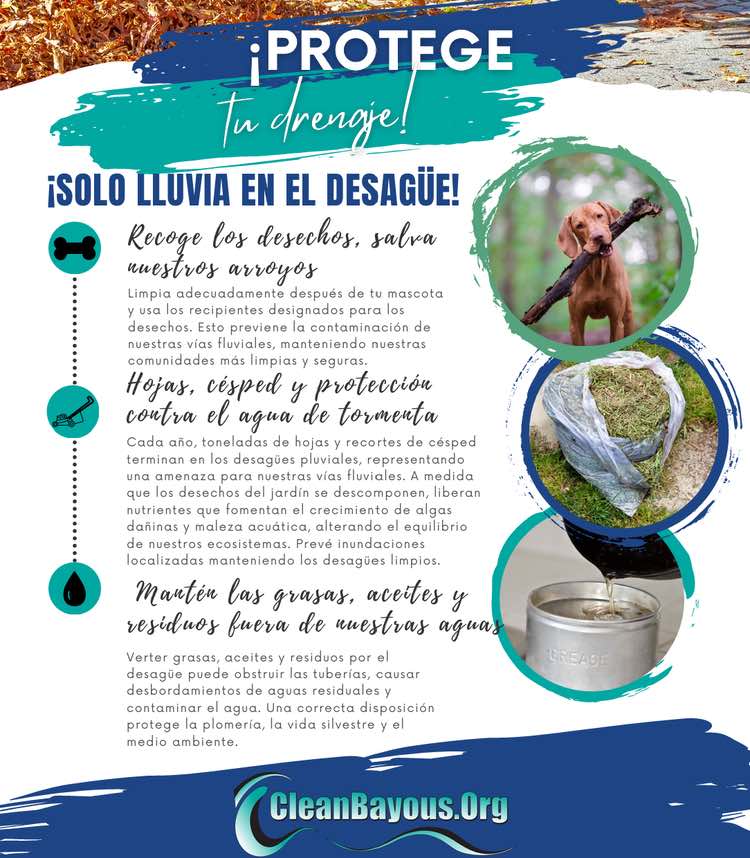
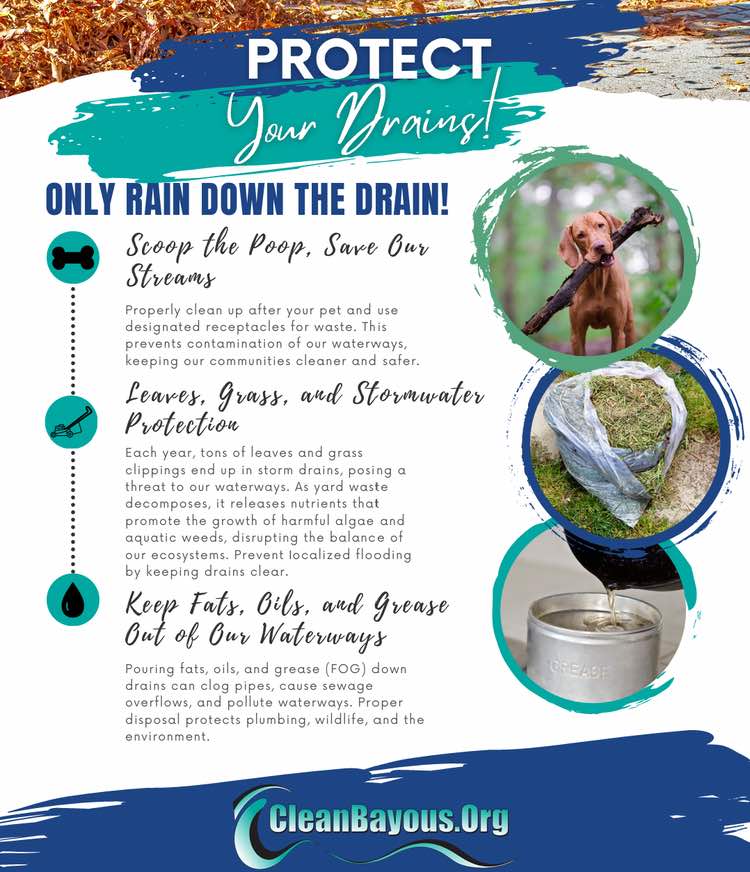
Protect Your Drains

Fort Bend County Municipal Utility District No. 128 Board of Directors, wants to remind residents not to put items down a storm drain for several important reasons:

  • Clogs and Flooding: Leaves and grass can block the natural flow of water in the storm drainage system, causing water to back up, which leads to localized flooding during rain events. This increases maintenance costs and efforts to clear clogged drains.
  • Water Pollution: Storm drains do not treat water, instead they carry everything directly to local creeks, rivers, or lakes. When yard waste decomposes in the drainage system, it adds excess nutrients (like nitrogen and phosphorus) to waterways, promoting algae blooms that deplete oxygen, potentially killing fish and harming aquatic life.
  • Transport of Harmful Chemicals: Grass and leaves may carry fertilizers, pesticides, or herbicides. When these chemicals enter storm drains, they flow untreated into waterways, contaminating the ecosystem and harming wildlife.
  • Habitat for Pests and Maintenance Issues: Accumulated organic debris in storm drains can provide breeding grounds for insects and rodents, creating further urban health hazards, and contributing to increased maintenance needs.
  • Legal Consequences: In some locations, sweeping or dumping leaves and grass into storm drains is a violation of municipal waste laws and may result in citations or fines.

Another eco-friendly approach is to compost leaves and grass or use community yard waste pickup services, rather than sending them down storm drains.

Please share with your neighbors and landscapers.
 

Small Action, Big Impact

The Fort Bend County Municipal Utility District No. 128 Board would like to remind residents of how small everyday actions can positively impact local waterways. You can employ smarter lawn care by using fertilizer and pesticides carefully to prevent runoff, cleaning up pet waste to reduce bacteria entering water systems, draining pool and spa water responsibly to protect fish and plants, and preventing illegal dumping and trash by keeping oil, paint, and chemicals out of storm drains. Let’s work together to protect creeks, ponds, and aquatic life by promoting responsible behavior in the community.

Update from BUGCO Pest Control as of October 7, 2025

BUGCO will fog for mosquitoes between the hours of 9:00 p.m. and 5:00 a.m. on Saturdays, weather permitting and in coordination with the City’s concurrent schedule (if applicable). While this practice significantly reduces the mosquito population, it does not eliminate them.

Mosquito fogging is restricted by legal limits on the amount of chemicals that can be applied within a calendar year. If the frequency of application is increased to more than twice a week, that limit would be reached as early as September, and treatments would cease sooner than mosquito season ends. To maintain an effective mosquito control strategy throughout the year and minimize disruptions, it is essential to adhere to the current schedule and respond adaptively to environmental conditions.

For additional information and measures for mosquito control and prevention, you may visit:

Mosquito Control at Home | Mosquitoes | CDC

Preventing Mosquito Bites | Mosquitoes | CDC

Tips to Prevent Mosquito Bites | US EPA

Notice of Public Hearing on Tax Rate: September 22, 2025

A public hearing for Fort Bend County Municipal Utility District No. 128 to discuss the proposed tax rate for the 2025 tax year will be held on Monday, September 22, 2025 at 8:15 a.m.. The hearing will take place at 202 Century Square Blvd., Sugar Land, Texas 77478, and by videoconference.

For more detailed information, including the official notice and tax comparison tables, please refer to the official notice.